Review: Best Before: The Evolution and Future of Processed Food
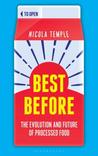 Best Before: The Evolution and Future of Processed Food by Nicola Temple
My rating: 4 of 5 stars
This is Part 1 of my cookbook extravaganza day.
Best Before is positively addictive reading, even if a bit of it was awful news about food.
What is processed food? Basically, it's almost everything you eat unless you are growing it or slaughtering it yourself. The origins of processed food lie in trying to safely preserve or store food. Going back to ancient techniques like smoking, salting, drying, and ice houses, Temple takes us forward to Kraft cheese and cheese in a can, all the way to the present day, filled with little mini-carrots and ready/frozen dinners. The big question and the point of Nicola Temple's book is how food was processed and whether the producer is transparent about the processing. From produce to cheese to bread to protein, to the deleterious effects of sugar, which is added to so many things. Temple closes out the book with a discussion of nanotechnology (a topic near and dear to my heart) and some of the caveats, and the future of processed food. I was quite fascinated and repelled by the chapter on cheese. And delighted with the literate discussion of celiac disease in the bread chapter.
Temple's discussion of the convenience conundrum, which drives the production and consumption of processed food, is worth the price of admission. Our modern lifestyle has affected our perceptions and expectations of food. (I'm mindful of that report last year which said that many children thought chocolate milk came from brown cows and didn't know pickles were actually cucumbers.) The actual nutritional content of many of these convenient processed items is of concern. This book was written with a British slant but she also reports on information for Canadian and American readers. America's love affair with salt and sugar have taken firm hold in the UK. Other things to consider in "ready meals" include the caliber of the ingredients (bound to be the cheapest) and the fact that many micronutrients may be lost due to overcooking. Then there are the additives (things like carrageenan and gums) and preservatives (thinks like polyphosphates). Temple does provide a thoughtful discussion on the various forms of processing, including flash freezing, and why some frozen produce might be better than fresh bought produce artificially ripened with ethylene. (Less waste due to spoilage and froze at the peak of ripeness.)
This book is fascinating enough to make me go and read Temple's previous outing, Sorting the Beef from the Bull: The Science of Food and Fraud Forensics, which sounds like a scary read.
I received a Digital Review Copy of this book in exchange for an honest review.
View all my reviews


Comments
Post a Comment
Please feel free to comment, but please also be polite. Spam posts will be deleted and the user blocked from future comments.