Review: Jane and Dorothy: A True Tale of Sense and Sensibility: The Lives of Jane Austen and Dorothy Wordsworth
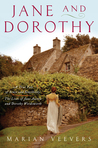 Jane and Dorothy: A True Tale of Sense and Sensibility: The Lives of Jane Austen and Dorothy Wordsworth by Marian Veevers
My rating: 4 of 5 stars
Jane and Dorothy is a serious biography of the early lives of writers Jane Austen and Dorothy Wordsworth, who were close in age though living in differing circumstances in Georgian era England. While much has been written about Jane Austen, far less has been published on Dorothy Wordsworth, sister of poet William Wordsworth, and that was part of the lure of this title for me. The central tenet suggested by the title, that one represented Sense and the other Sensibility (as in the Austen novel) is a rather flawed one, as Veevers herself points out. This is, nevertheless, an interesting exploration of these two women's early lives. Both lived with family, Austen happily so, though Wordsworth less happily so in her early life. Following the death of her mother, Dorothy endured a stultifying existence until she was able to leave her grandparents to live with her adult brother, William. Though both Jane and Dorothy wrote, one obviously became quite famous while the other seemed content to have her writing live in the shadow of her brother, one of the most famous poets of the Romantic Period in English literature.
This tandem biography provides insight into the lives of women during this period in English history. To put it mildly, expectations of ladies during the Georgian era were rather narrowly structured. The claustrophobia of Jane and Dorothy's rather constrained lives produced very different women. Jane Austen turned her sharp eye on society and its demands of women. She learned caution and forbearance and just as did many of her wise heroines, and also learned that less intimacy and familiarity in friendships sometimes produced better results. Her sister Cassandra was her true confidant. In contrast, Dorothy for a time almost reveled in her role of suffering while living with her austere grandparents, and once living with William, placed a high value on emotional expression rather than circumspection. While Jane went on to deepen her understanding of the social condition that women, and especially unmarried or late-marrying women, found themselves in, Dorothy languished romantically. The biography manages to tackle the sticky question of whether or not Dorothy and William had an incestuous relationship, and also discusses Dorothy's seeming infatuation with a married man, Samuel Taylor Coleridge, who she was later shocked to find was a drug addict and who managed to hurt just about everyone who knew him in one way or another.
An interesting aspect of this biography is their writing and differing expectations of writing for public consumption. While Jane Austen wrote from an early age and achieved great success as a writer, Dorothy Wordsworth seems to have eschewed public attention for her writing. And yet her writing, particularly in her Grasmere Journal, is quite luminous and as more recent scholars have noted, was borrowed from extensively by her brother William. In many instances, Dorothy's writing seems to have strongly informed William's. (One of the revelations of this biography, that William Wordsworth had lost his sense of smell and relied on Dorothy for scent and taste descriptions, is quite fascinating.) The reader can see some newer information about the Grasmere Journal in a Sian Cain's recent article in The Guardian.
Neither Jane nor Dorothy ever married and Veevers probes into their reasons, especially whether Jane's unmarried state, when viewed through the lens of a modern acceptance of a woman having a career, was in fact, a choice that allowed her to keep writing. Veevers questions the stories of a late potential love lost in Austen's life as perhaps contrived by the Austen family to explain Jane's spinsterhood as somehow not her choice. The idea of choosing to remain unmarried for career reasons would be inconceivable in Georgian England. Dorothy's reason for remaining unmarried seems to have been far more easily accepted as a choice to help her brother's career (and indeed, she did!) and family.
All in all, this was an enjoyable read. Veevers provides a wealth of references for the reader.
I received a Digital Review Copy of this book in exchange for an honest review.
View all my reviews


Comments
Post a Comment
Please feel free to comment, but please also be polite. Spam posts will be deleted and the user blocked from future comments.